
Lease Abstraction Due Diligence: What CRE Acquisition Teams Need to Know
In CRE acquisitions, lease abstraction due diligence isn't about whether to abstract. It's about moving fast, finding everything, and pricing accurately before closing.
Key Takeaways
- Lease abstraction is the foundation of due diligence — not a box to check.
- Certain tenant rights and liabilities bind the new owner at closing regardless of disclosure.
- Estoppel gaps create real post-closing risk that stays with the buyer.
- Hidden CAM liability in one lease can affect portfolio returns materially.
- Faster lease review (7-10 days) becomes a competitive advantage in deal execution.
The Real Question: Speed, Not Whether to Abstract
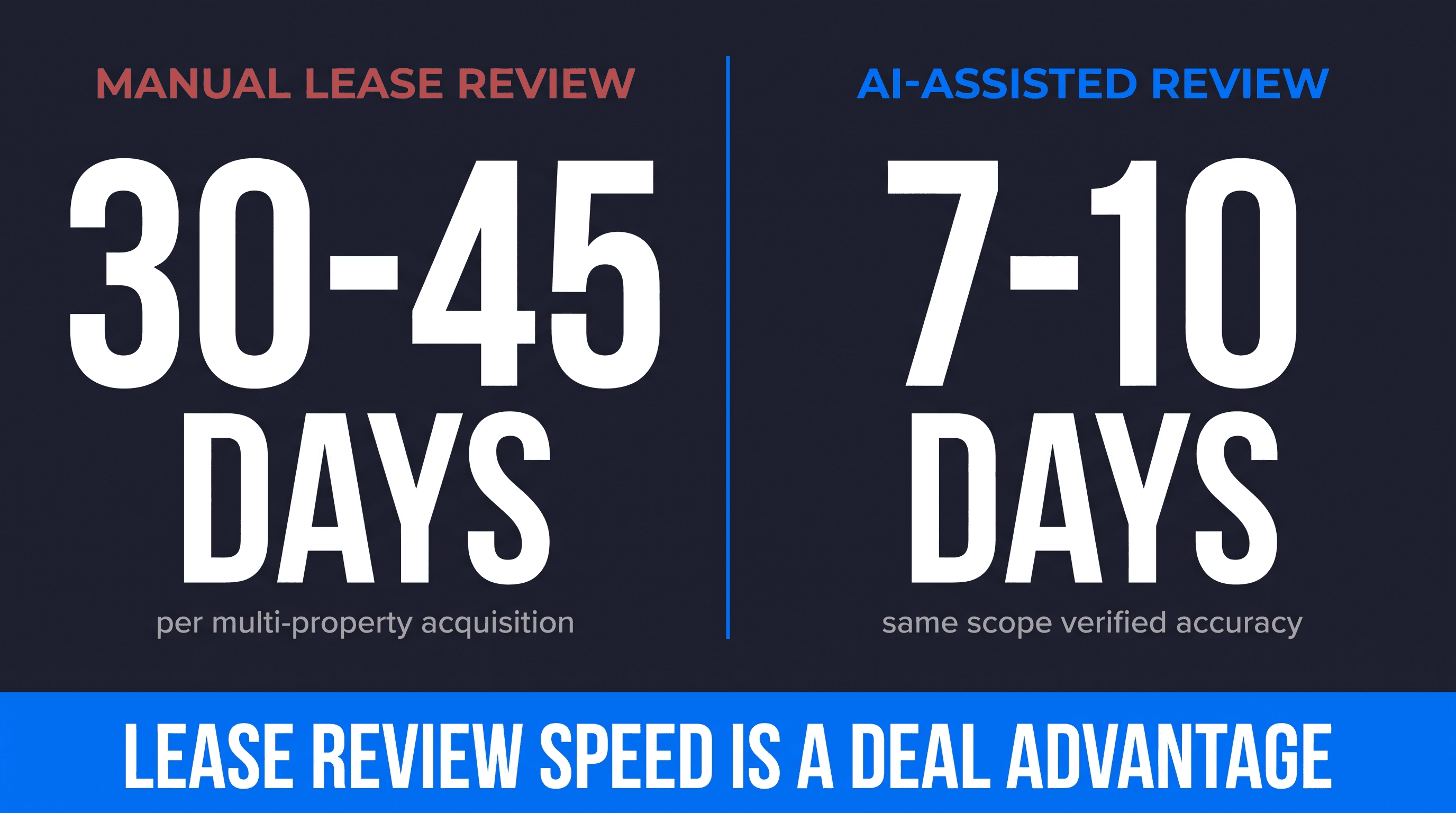
Manual lease review in multi-property acquisitions typically takes 30 to 45 days. AI-assisted review compresses it to 7 to 10 days. That difference is not incremental. It changes the deal.
Teams that finish lease abstraction due diligence quickly can negotiate tighter deadlines, pursue multiple opportunities in parallel, and arrive at investment committee with cleaner data faster than competing buyers.
What Liabilities and Rights Survive Ownership Transfer?
When a commercial property sells, the new owner steps into every lease obligation. Tenant rights, CAM structures, estoppel commitments, and co-tenancy protections all transfer — whether or not the seller disclosed them.
Rights That Transfer Intact
- Unexpired renewal and extension options
- Expansion and contraction rights
- Co-tenancy protections and rent reduction triggers
- CAM obligations and base-year structures
- SNDA agreements and lender protections
Understanding what transfers is the first job of lease abstraction due diligence.
The Estoppel Gap: Where Post-Closing Risk Hides
Tenant estoppel certificates are standard in CRE acquisitions. But the gap between complete coverage and what teams actually receive is where post-closing risk lives.
Teams that handle estoppels best abstract leases first, then compare estoppel certifications against abstracted data, field by field. When the abstract says one thing and the estoppel says another, the gap shows up immediately.
Hidden CAM Liability Starts at the Abstraction Phase
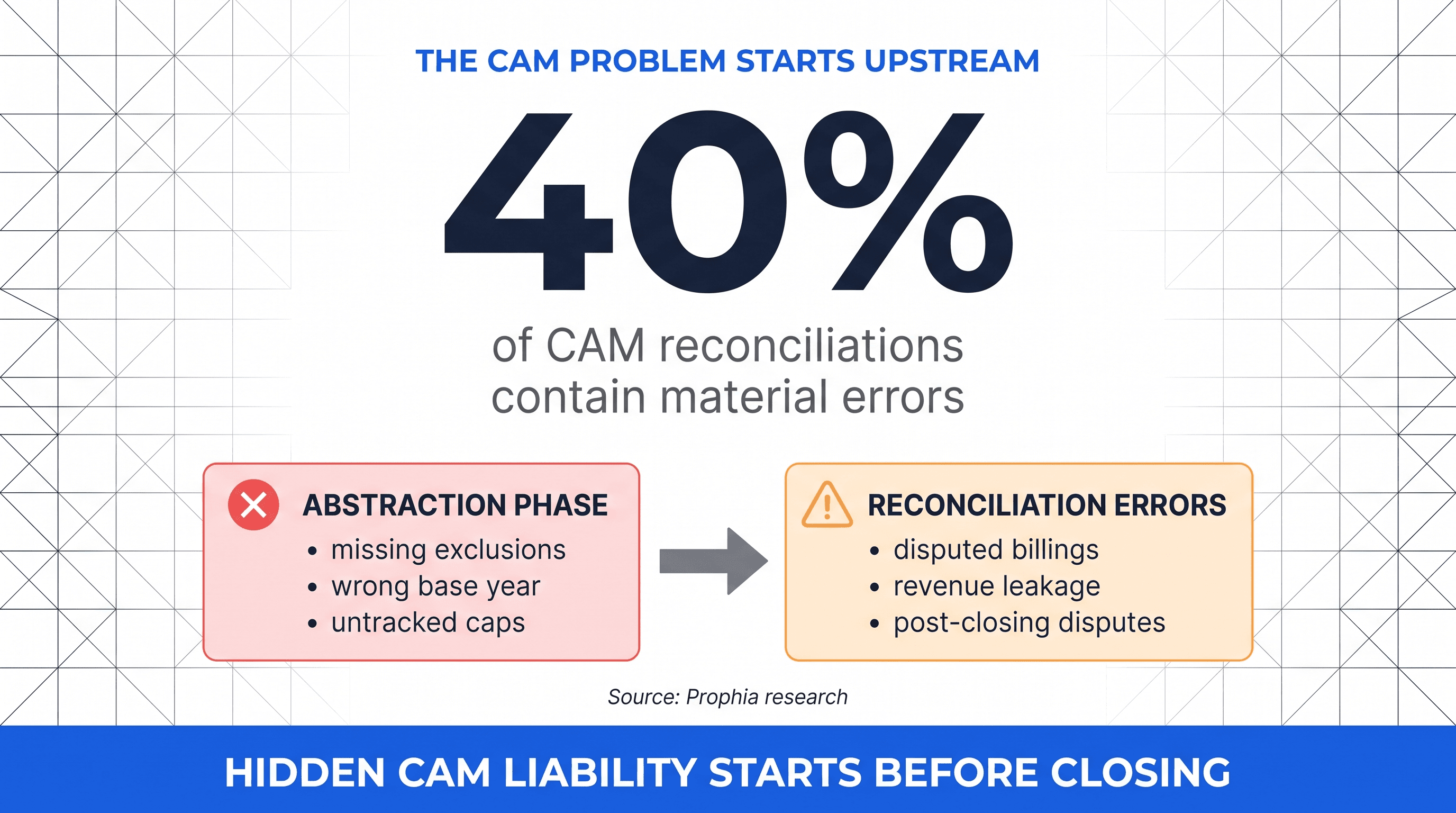
Approximately 40% of CAM reconciliations contain material errors. But most errors don't start in the reconciliation spreadsheet. They start in how the lease terms were abstracted — or weren't.
When a property sells, the new owner inherits that faulty foundation. CAM cap base years, tenant-specific exclusions, and controllable vs. uncontrollable cost separation — all of these terms drive every CAM calculation. If they weren't accurately captured, every reconciliation after that runs on faulty data.
How to Scope Abstraction for Different Deal Sizes
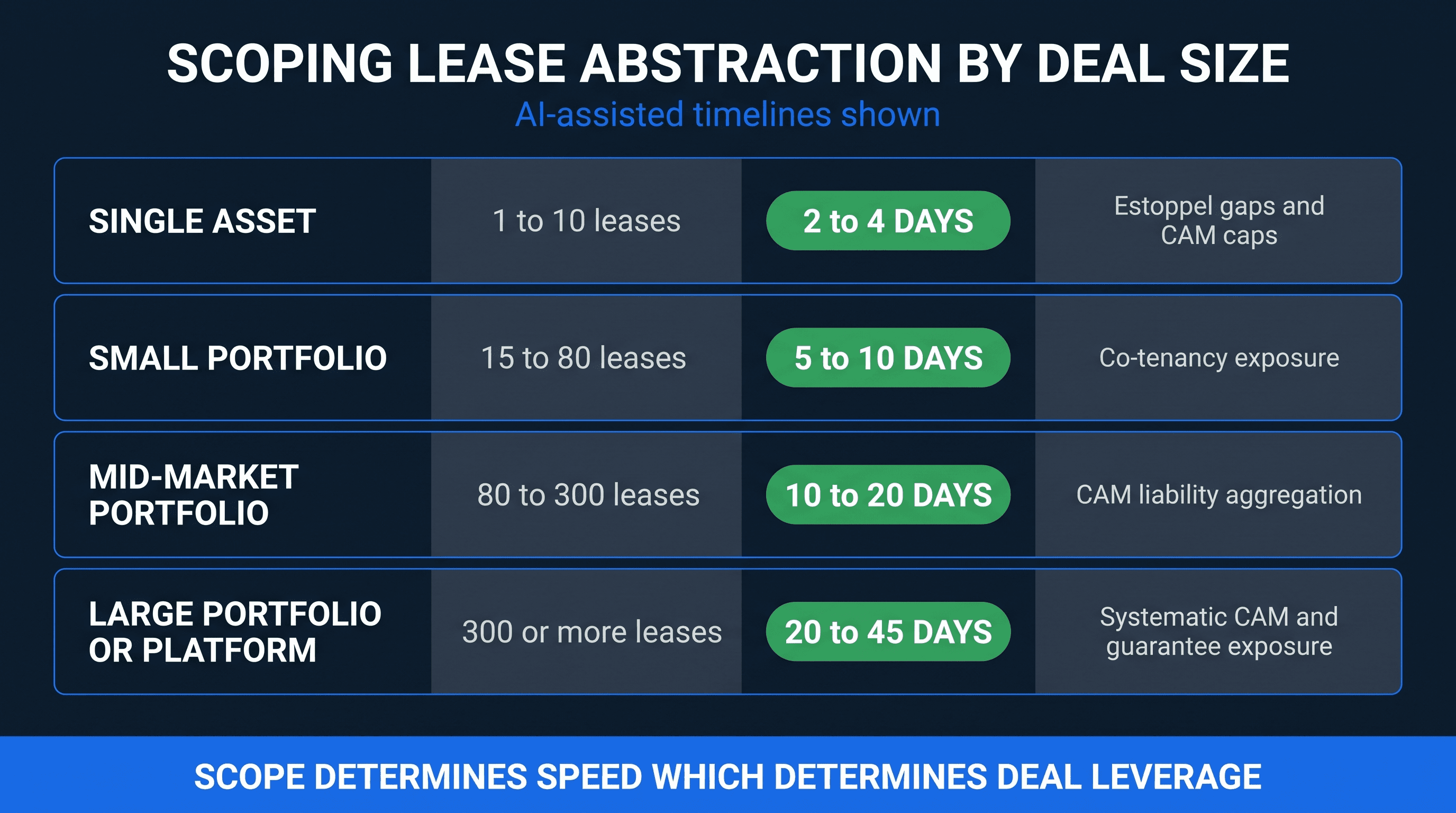
Not all acquisitions need the same abstraction depth. Scope, speed, and focus should match the deal size, timeline, and risk profile of the asset.
A Lease Due Diligence Checklist for Acquisition Teams
Phase 1: Document Collection
- Base leases and all amendments
- Side letters and letter agreements
- Guarantee documents and estoppel certificates
- SNDA agreements and TI allowance records
Phase 2: Abstraction Priorities
- Financial terms and escalation formulas
- Critical dates and option windows
- CAM structure and tenant-specific exclusions
- Tenant rights and co-tenancy clauses
- Guarantee terms and SNDA status
Phase 3: Risk Summary
- Lease expiration schedule and option calendar
- CAM liability summary by tenant
- Estoppel vs. abstract conflict flagging
- Co-tenancy trigger map and guarantee coverage
How Lease Review Speed Becomes a Competitive Advantage
Faster lease abstraction due diligence gives acquisition teams more time, more negotiating leverage, and lower risk at every stage of a deal.
- Shorter due diligence periods: A 21-day diligence window instead of 45 days can be the deciding factor in competitive bid processes.
- More deals in parallel: Teams that compress review to 10 days can work on multiple opportunities without resource conflicts.
- Tighter pricing: Faster, more thorough review means fewer post-closing surprises and better price accuracy going in.
Frequently Asked Questions
What is the purpose of lease abstraction in CRE acquisitions?
Lease abstraction converts complex documents into structured data, making financial modeling, risk identification, and estoppel verification possible. Without accurate abstracts, underwriting rests on representations rather than verified document data.
How long does lease abstraction take for a multi-property acquisition?
Manual review typically takes 30 to 45 days. AI-assisted abstraction compresses this to 7 to 10 days for the same scope, with every extracted field source-traced to its exact clause.
What should acquisition teams look for in CAM due diligence?
Focus on CAM cap base years, tenant-specific exclusions, and the separation of controllable vs. uncontrollable costs. These are the fields that most often contain errors inherited from the prior owner.
The Bottom Line
Lease abstraction due diligence is not a checkbox. It's the analytical foundation that determines how accurately an acquisition team understands what they're buying — and what deals they can close in a competitive market.
See how Abstria handles lease abstraction due diligence for CRE acquisition teams.